PRODUCT CENTER

Characteristics of galvanized seamless pipe
Light weight, easy to handle
Because the galvanized seamless pipe itself is relatively light, the daily transportation and construction are very simple, which can save a lot of time and cost.
Good corrosion resistance
The corrosion resistance of seamless steel pipes is very good. They are resistant to acid, alkali, salt and atmospheric environment. Moreover, it is resistant to high temperature and impact, and does not need regular maintenance.
Good physical and chemical properties
Galvanized seamless pipe has very good physical and chemical properties, its tensile strength is more than 8 times stronger than ordinary steel, and its elastic modulus is also better than ordinary steel. Moreover, it also has good mechanical capabilities and is very easy for daily processing. Long term use will not deform, anti-static ability is good.
SEE MORE
Product:Casing and Tubing Coupling, Casing Coupling, Tubing Coupling
Application:Used for connect 2 joints of tubing or casing
Size:Tubing Coupling : 1.9'' - 4-1/2''
Casing Couping : 4-1/2'' - 13-3/8''
Pipe Standard: API 5CT and 5B PSL1/PSL2 J55,K55,N80-1,N80-Q,API 5CT and 5B L80-1,C90, C95,T95, P110, Q125
Surface:Whole Phosphating or inside phosphating and outside coating
Thread:NUE, EUE, STC, LTC, BTC etc
SEE MORE
Product: Drill Collar
Standard:API SPEC 7-1
Steel grade:AISI 4145H
Sizes:3 1/8" -- 11"
Connected Type:NC, IF, REG
SEE MORE
Hot dip galvanized pipe is to make molten metal react with iron substrate to produce alloy layer, so that the substrate and coating can be combined. Hot galvanizing refers to pickling the steel pipe first. In order to remove iron oxide on the steel pipe surface, after pickling, the steel pipe is cleaned in ammonium chloride or zinc chloride aqueous solution or mixed ammonium chloride and zinc chloride aqueous solution tank, and then sent to the hot dip tank. Hot dip galvanizing has the advantages of even coating, strong adhesion and long service life.
SEE MORE
1. For pipelines. Water, gas pipes, steam pipes, and oil and gas trunk lines. 2. Tubes for thermal equipment. Superheating pipes, high temperature and high-pressure boiler pipes for locomotive boilers. 3. For the machinery industry. Aviation structural tubes, automobile axle tubes, tractor structural tubes, etc.
SEE MORE
CONTACT US
Email : lily@zhenghuasteel.com
Email : colin@zhenghuasteel.com
Add : Starlight Liaocheng International Financial Center, Dongchangfu District, Liaocheng City, Shandong Province
GET A FREE QUOTE
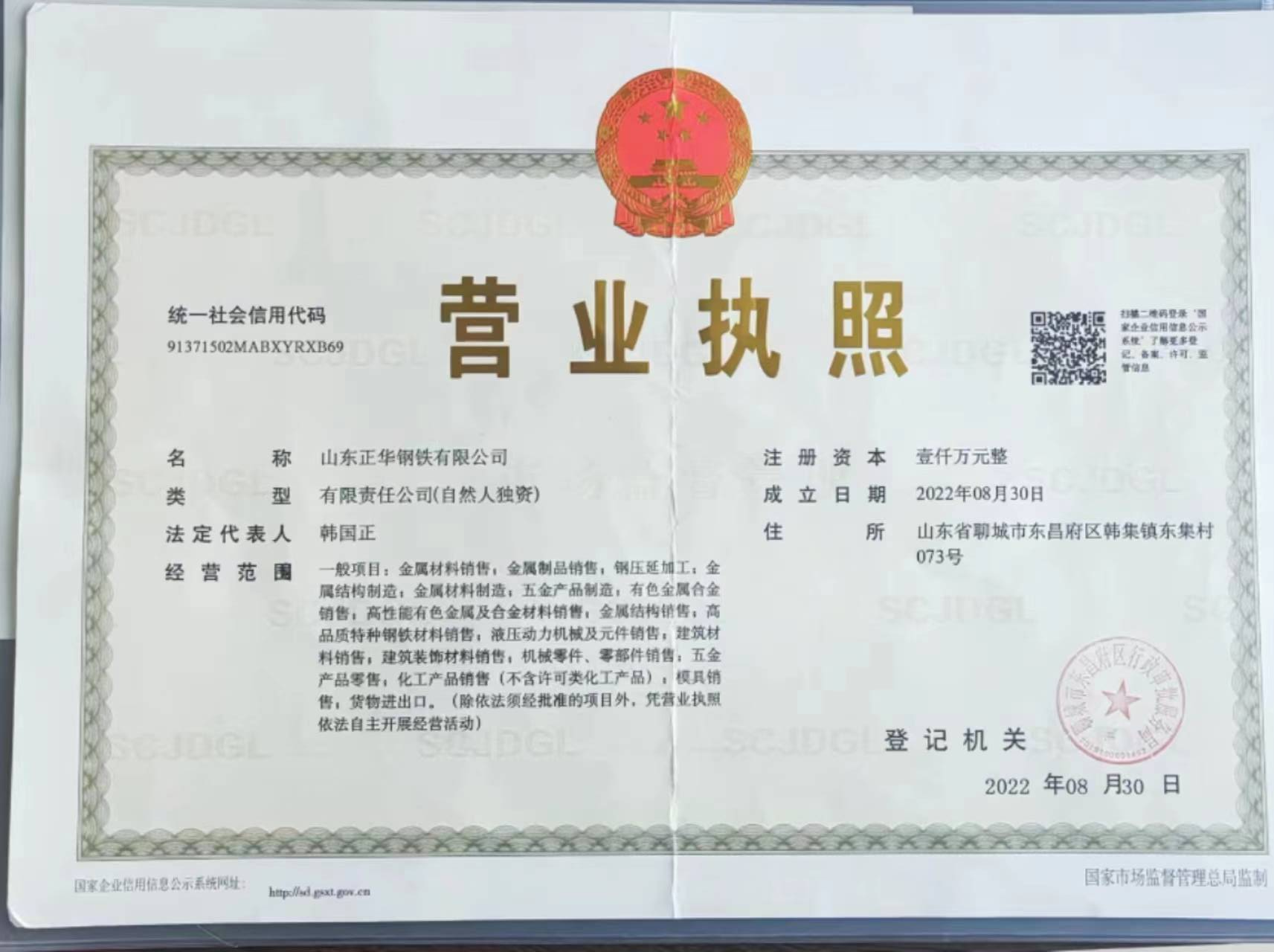
Copyright 2025 : Shandong Zhenghua Iron and Steel Co., Ltd. Powered by:CEglobal SEO BUSINESS LICENSE